With the end of the year coming up, it’s the perfect time to reassess your business goals for the coming year and turn them into reality. Is entering the German market one of yours for 2025?
Breaking into a new market can seem daunting, and it’s easy to put off. Internationalisation and localisation are complex processes.
Here are some time-saving tricks to help you strategise breaking into the German market and make the most of your time by prioritising your localisation efforts efficiently.
What is UX localisation?
Localisation is the process of making a product local in character for a specific audience. This obviously means translating, but goes well beyond.
It’s means rephrasing the words in the new language to make the product feel natural for local users. And it’s multilayered in that it involves formatting, changing content to make it legally compliant, adapting imagery and cultural elements, and lots, lots more.
You are essentially reshaping your app or site to meet the needs and expectations of your target audience, from a linguistic, cultural, and transactional perspective.
Why localise an English product?
Businesses aim to create a great customer experience (CX), but often overlook investigating whether their home-market strategy works in other countries and cultures.
Many miss the importance of engaging audiences across international markets with content that truly resonates – not just through simple translation, but a full language experience that reflects their brand and builds trust.
Users prefer content in their language
The content and language services firm CSA Research explored people’s preferences for using websites and apps in their native languages versus a foreign one like English.
They surveyed over 8,000 consumers across 29 countries, revealing some striking, if not entirely surprising, insights:
- 40% will not buy from websites in other languages.
- 65% prefer content in their own language, even if the quality is poor.
- 73% want product reviews in their own language.
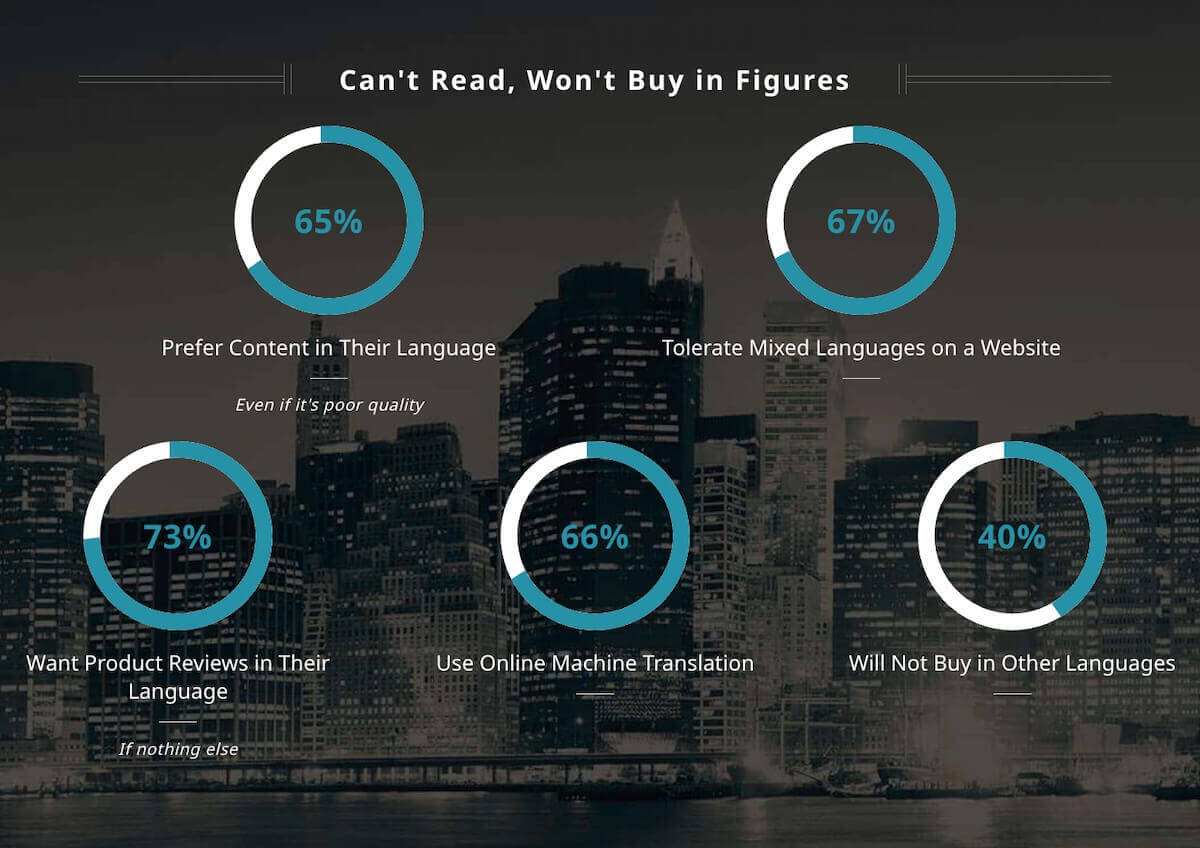
Can’t read, won’t buy, that’s how they summed it up. And that says it all. Some audiences will turn away if you don’t use their language and local elements, or they’ll go with a “good enough” competitor who does.
Considering these insights, you can see how important good localisation is to establishing a successful business in another country, and for usability in general. Users show a strong preference for reading and interacting in their primary language.
Hire a UX localisation expert
To accomplish localisation for the German market requires support from someone with a nuanced understanding of the country, language, and the culture of the target market. Someone who knows how to make your product user-friendly but also brand-coherent for German users.
Partnering with someone experienced in localising brands like yours will also provide guidance and help streamline the complex process to make it more time-efficient for all involved.
A UX localisation expert is essential for your success in Germany to make your English product feel natural for German users.
Find a UX localisation expert
Seek out a freelance business owner directly. Agencies have their place, but direct contact with your localisation expert ensures you get just the right balance of of consulting services and deliverables exactly as and when you need them.
Which freelancers have you worked with in the past that put a smile on your face when you think of them? People who delivered good work and were a pleasure to work with? Reach out to them. Chances are that they may know somebody who’s a UX localisation expert.
Then, use LinkedIn to post your requirements:
- Language pair: English to German
- Field: UX localisation and strategy
- Timeframe: Deadline or rough timeline
LinkedIn is a goldmine for recommendations. Check out profiles, get in touch, and get on a video call to see whether you’re on the same wavelength.
Look for someone who’s kind and friendly. Localisation is a process and many details need to be addressed along the way. It’s not like marketing copy where the copywriter can go into deep dive when they’ve had a briefing and resurface when the first draft is ready for sign-off.
You’ll be in touch weekly, probably even daily. You’ll enjoy it a lot more, if you click with the person. It’s key to a productive working relationship.
Focus on high-impact projects, e.g. your website
If you’re localising your product, you’re most likely using agile software development with prioritisation as a key element. Proceeding in this way is essential for designing and developing successful digital products (localisation is part of this), as it let’s you inspect and adapt on the go.
You’ve got a wealth of English content – website, blog, newsletters, social media, and so on. Localising everything at once for the German market is a bad idea. So, prioritise.
- If you have an app, start there, so users can start using it.
- If you have a different product, start with your website, that’s the base of your online presense as a business. A German site lets users get to know you and builds trust.
Once your site’s live, gradually translate other content areas to enrich your new customers‘ experience.
Optimise the user experience (UX) for German users
A well-translated app and/or website is just the beginning. To truly engage your German audience, you need to optimise the user experience. This means considering cultural nuances, design preferences, and user behaviours specific to German users.
- Payment options: Ensure you offer popular German payment methods like PayPal, Sofortüberweisung, and SEPA direct debit.
- Local preferences: Germans appreciate clear, direct information. Avoid excessive embellishments and keep the design clean and functional.
- Legal compliance: If you’re doing business in Germany, your product needs to adhere to German regulations regarding data protection (GDPR) and e-commerce laws. Don’t overlook the essentials: T&Cs and privacy policy.
Gather feedback from German users and continually refine your UX to meet their expectations.
With your German website up, it’s time to shout about it. Use German ads on platforms like Facebook and Instagram to drive traffic. Tailor these ads to your German audience.
Announce your site’s launch on your social media stories and main feed, and save these announcements in highlights for newcomers. Consider a special offer for first-time German buyers.
Update your social media bios to reflect your German site’s availability, maybe with a little German flag emoji. 🇩🇪
Get German testimonials
Localised social proof can significantly influence purchasing decisions.
Your special offers will soon bring in your first German customers. Once they’re happy, ask for testimonials. Including their name and German city adds authenticity and local flavour, making future customers feel more connected.
No German testimonials yet? No worries. Just keep it in mind and start collecting when the occasions arise. They’re invaluable for building trust with potential customers.
Hire a bilingual virtual assistant
Breaking into the German market is a ton of extra work for the whole team at the start – for the product manager, software developers, designers, UX writers, and localisation experts. Don’t overwhelm yourself or your employees.
Hire a bilingual support agent or virtual assistant (VA) who speaks English and German. They can handle customer queries, help implement your German site, create ads, do social media work, and more.
A bilingual VA is a small investment with a big payoff, easing your workload and letting you focus on your core business.
Provide German customer support
Providing top-notch customer support in Germany is crucial for building trust and loyalty. Ensure that your customer service can handle inquiries in German fluently.
- Multilingual support: Hire support staff who can seamlessly switch between English and German.
- Prompt responses: Germans value punctuality. Aim to respond to queries quickly and efficiently.
- Localisation of support materials: Translate FAQs, user guides, and troubleshooting documents into German. Consider placing them above the fold. This can reduce the total of incoming inquiries a lot.
A responsive support team enhances your customers’ experience and fosters positive word-of-mouth.
Prioritise localisation based on customer preferences
For UX specialists, the most common way to understand users and how to improve a product is to run UX research, like a user interview or a usability test.
At the same time, a customer support agent will be sitting on a pile of free-of-charge insights. Support agents work at the frontline. The inquiries that come in indicate just what users find lacking. This is a goldmine for further improving your business.
The simplest thing you can do is to talk to your German support agent(s) to understand local preferences. Set time aside on a regular basis to speak with them and to find out where problems lie. This is an easy way to glean information that will act as a compass for prioritising next steps.
Add a FAQ section to your home page
Based on what you’ve gleaned from your German support agent(s), make a FAQ section to provide key information and answers to common questions.
A FAQ section is a quick and easy way to provide valuable information to your audience. It’s easy to implement and the impact is high in that it reduces incoming inquiries and takes weight off your team.
Maintain German language assets
Non-negotiable. Keep your German style guide and glossary up to date. Schedule regular reviews to ensure consistency and reflect evolving language choices. Both assets are vital for maintaining a strong, coherent brand message across all markets.
- Style Guide: Crucial for defining your brand’s unique tone and voice. It addresses whether to use formal or informal language, active or passive verbs. Regular updates are essential as both language and companies evolve.
- Glossary: Vital for defining terminology and maintaining consistency. Standardised key terms and phrases get documented in a glossary to make sure that terms are used the same way every time. This helps the business build a stronger and more coherent brand message.
How-tos for your style guide and glossary
There are a few things that make the style guide and glossary easier to maintain, especially if there’s more than one person using it.
- Determine who „owns“ the document. At the top left of each document, write down the name of this person and how to get in touch. This is the person who has the last say – who can approve (or decline) suggestions and make final decisions.
- Any new suggestions must be added in a way that’s clear to the owner of the docs.
- Create a column on the left in which you add a drop-down to visualise the status. Typical formatting is red = suggestion, yellow = in progress and green = approved by the owner of the document.
- Create a column to the right of the content for comments, e.g. to document reasoning for decisions or links to a language dictionary.
Summary
Get a UX localisation expert and a bilingual support agent. Ensure your German website is polished, maintain a robust social media presence, and start collecting those testimonials.
Prioritise, take it step by step, and you’ll soon see progress, build a German audience and make sales.
Make 2025 the year you drive your business growth in Germany.